The atmosphere of an automobile repair shop,
seen through invaluable photographs from those days
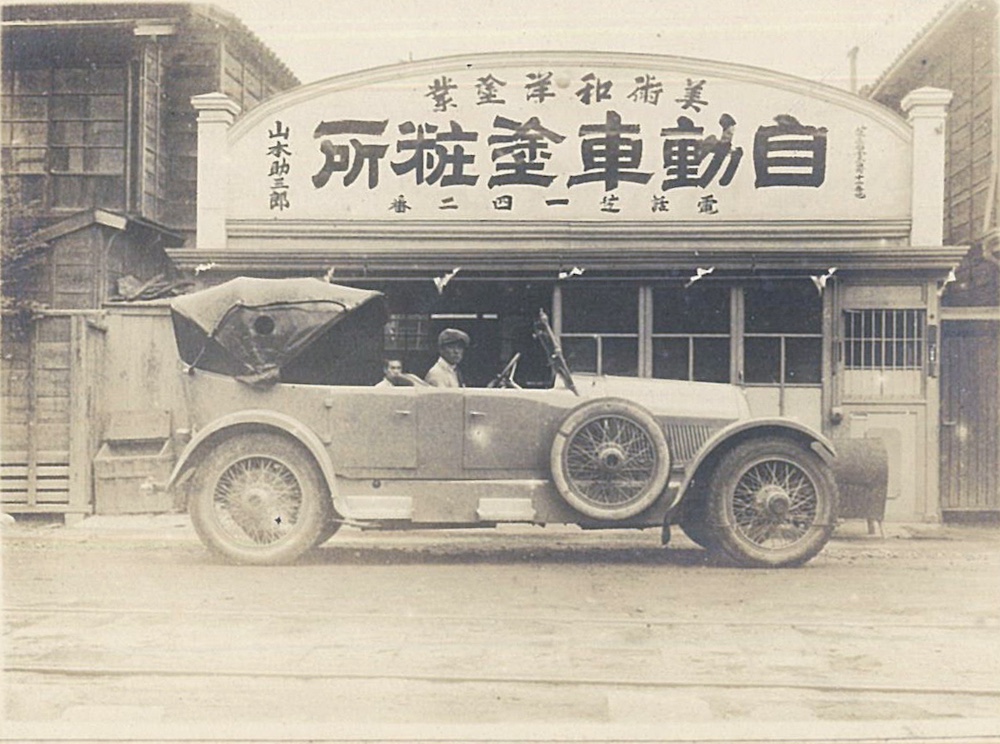
This is a photograph taken in October 1923 (Taisho 12). Typography on the signboard gives an impression of the dawn of the automobile industry. The model of the car is unknown. From its shape it appears to resemble a Rolls-Royce or another car of that kind. In any case, large cars were extremely expensive at the time and could be afforded only by a few wealthy people.
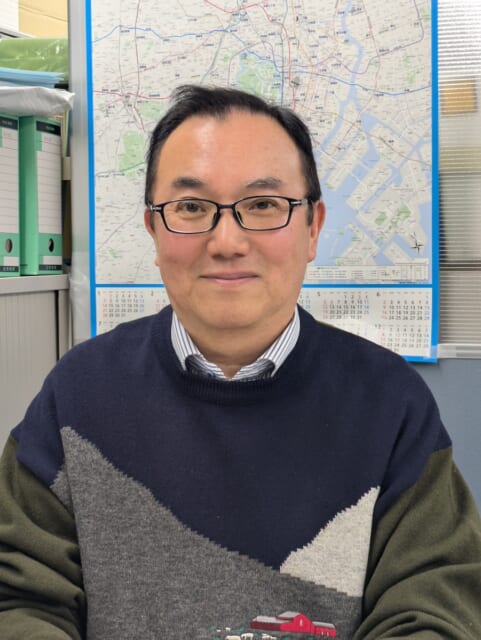
This is Mr. Yasushi Yamamoto, who has provided the materials this time. He was born in 1956 (Showa 31) at the place where the photograph was taken, and lived there until he was an elementary school student. The site where the factory once stood has since been replaced by an office building, but a repair shop remained there until recently.
The photograph below shows the building under construction. It was located on the far side of the Toden line, and the building visible on the right side of the photograph is the present Takanawa Regional City Office.
https://www.takanawa-konjaku.jp/en/photo-archives/photo-00252/
The building located near the footbridge visible in the bottom right of the photograph below stands on the site where the first photograph was taken.
https://www.takanawa-konjaku.jp/en/photo-archives/photo-00301/#gid=1&pid=1
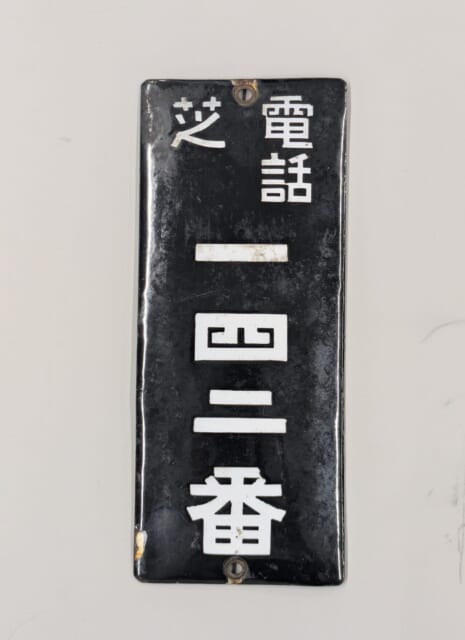
This valuable photograph was kindly provided by Mr. Taishi Yamamoto, who has close ties to Takanawa. He was born and raised near the present Takanawa Regional City Office. As his grandfather ran a repair shop, the photograph conveys the atmosphere of the early automobile era in those days. In the photograph, a very valuable car of that era is visible, and it is very impressive that Mr. Yamamoto’s grandfather — or perhaps one of his employees — was sitting proudly in the driver’s seat.
The photograph was taken in 1923 (Taisho 12), and the back of the photo bears a handwritten note reading “August 15”. According to “The National Car Owners Directory” published that year, Tokyo’s automobile registration numbers reached 4,997. As there were a few missing numbers, the actual total number of vehicles was smaller than this figure, though it may still be more than one might expect. In this directory, the names and addresses of car owners are listed and among them appears ‘Gonbei Yamamoto, Takanawa’. The name inscribed on the signboard in the photograph, however, is ‘Sukesaburo Yamamoto’, the relationship between the two individuals is unknown, but it is certain that there was at least one privately owned car in that year in Takanawa. Incidentally, Koyata Iwasaki, the fourth president of the Mitsubishi Zaibatsu, also owned private cars in Takanawa in those days, and he owned multiple vehicles.
The signboard of the repair shop behind the car in the photograph bears “美術和洋塗業 (Japanese and Western Art Painting)” as the type of trade and “自動車塗粧所 (Automobile Painting and Coating Factory)” as the shop name. This suggests that the present-day automobile painting business may have originated from shops that handled the painting of horse-drawn carriages and similar vehicles before the advent of the automobile. The term “和 (Japanese)” refers to traditional lacquer painting, while “洋 (Western)” indicates the use of modern paints, showing that the shop was capable of both painting techniques. This demonstrates that the shop was one of the most advanced and skilled facilities of its time.
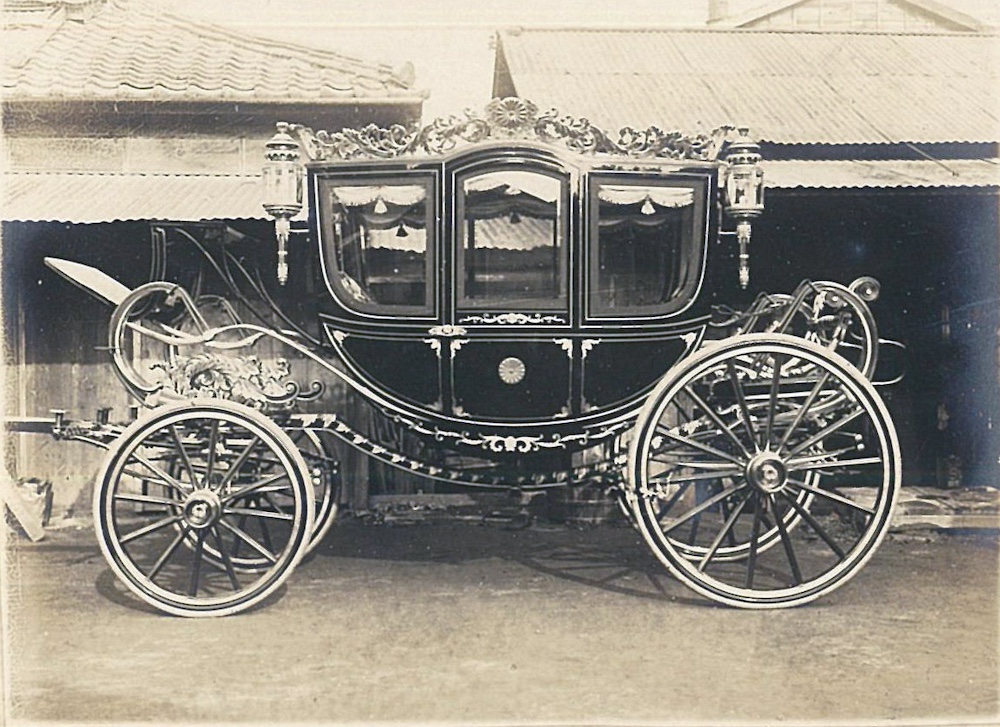
Another photograph, kindly provided to us, shows a carriage of the Imperial Family standing in front of the factory, demonstrating the shop’s remarkable craftsmanship. The shop appears to have been responsible for repairing these carriages. Carriages of the same type are still used by the Imperial Family today.
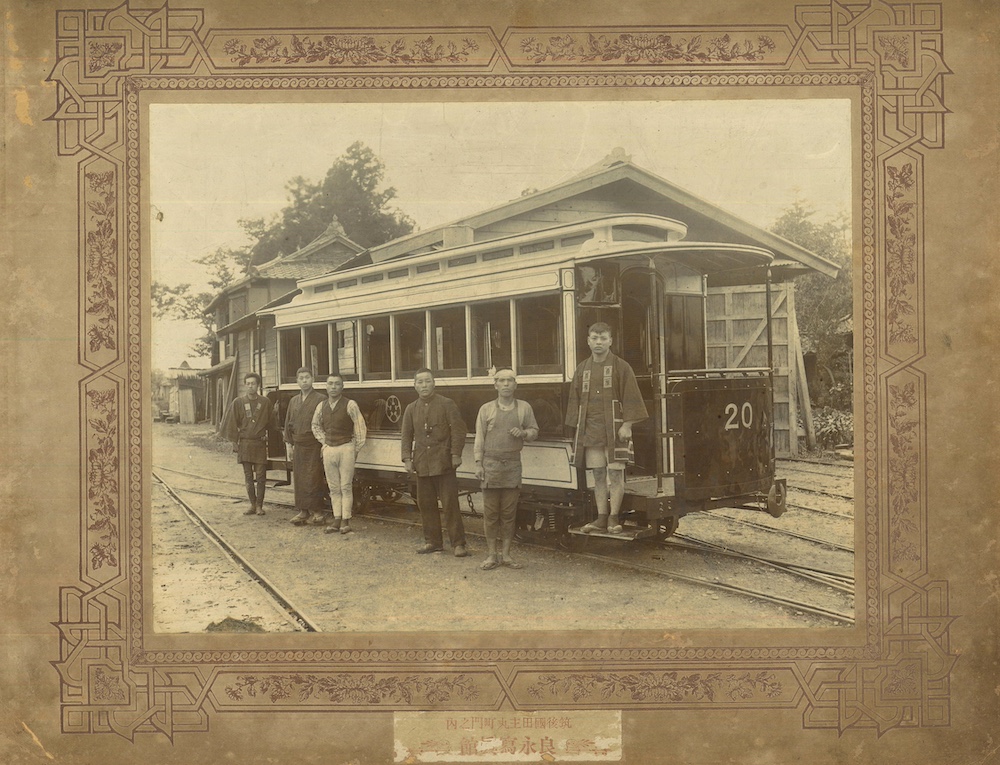
And another photograph, taken in 1905 (Meiji 38) in what is now Fukuoka Prefecture, with the names of the craftsmen noted, suggests that it was a commemorative photograph taken upon the completion of the bodywork. Since they traveled all the way from Tokyo to carry out the painting, this too indicates the remarkable craftsmanship for which the shop was known.